War Agricultural Committees
The War Agricultural Committees played a central role in dictating farming policy during World Wars I and II and set the stage for state intervention in food production. They were formed by the Board of Agriculture on county lines to secure food security when British ports were under threat and food was in short supply. In 1939, 70% of British food was imported. British farming had undergone a depression in the 1930s. Most farms were small scale and mixed and couldn’t compete with cereal prices from highly mechanised American and Canadian farms.
Blockading the ports gave the Nazis a clear strategic advantage unless home grown food could be vastly increased. This was the task set for the War Agricultural Committees. The committees were made up of farmers, landowners, a representative of farm labourers and a woman to represent the Women’s Land Army.
Draconian Powers
They became known as the ‘War Ag’ and retained draconian powers to direct which crops and livestock farmers could produce. Crops of oats, wheat, potatoes and sugar beet were preferred over pasture for livestock as these would feed far more people. A central Government target was cascaded down to each farm by county and district committees. Farmers were offered £2 per acre to grow crops in uncultivated land. Individual targets were set for production. This led to disputes with some farmers who thought they knew best what would grow on their land, but the ‘War Ags’ strictures were ignored at peril of confiscation of the farm. Over 15,000 farms were requisitioned by the ‘War Ags’ equating to 5% of cultivated land. At the end of the war, they were offered back to their owners or tenants.
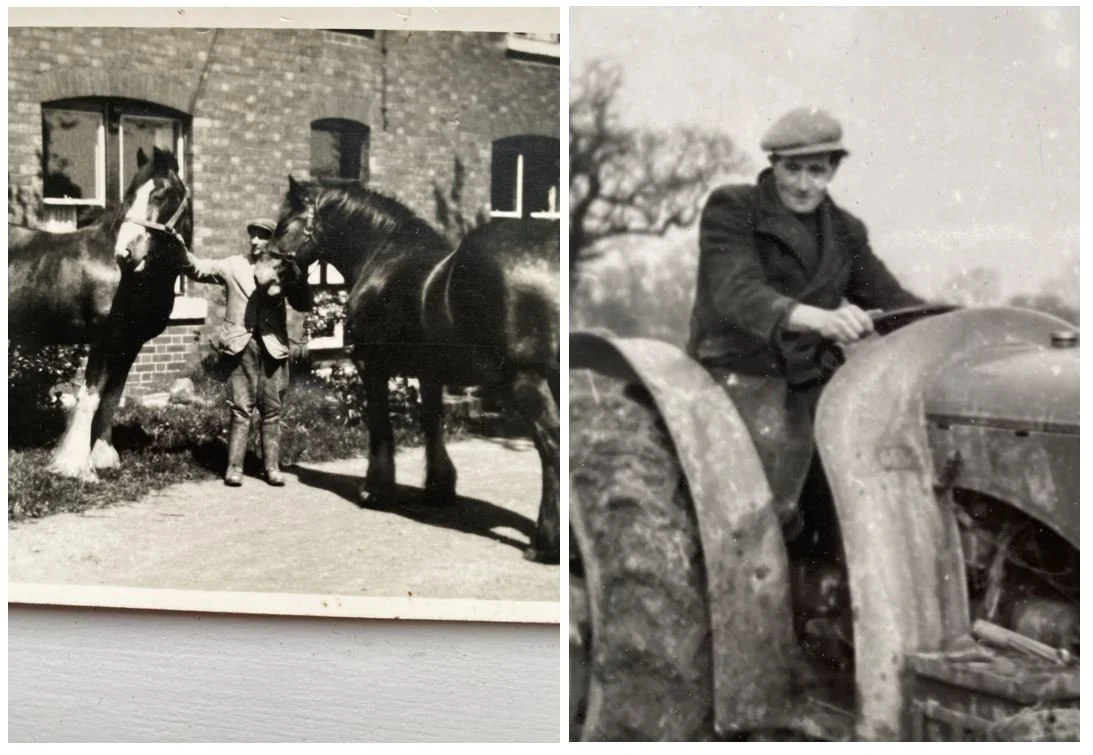
They successfully converted 1.7 million acres of marginal land into production and kept the nation fed throughout the war. As well as setting production targets, they had the task of securing supplies of machinery, fertiliser, feedstuffs and labour. They provided free advice and organised contractors at harvest time. Mechanisation grew during the war years from 56,000 tractors in use in 1939 to 203,000 by 1945. Horses were still used on many farms and came into their own when petrol rationing was introduced.
Labour shortage
Labour was supplemented by the Women’s Land Army (volunteers until 1942 and then conscripted), 36,000 women and girls took part. Conscientious objectors and prisoners of war were put to work on farms. At harvest time camps of schoolchildren were established to help.
The workforce of Pembridge was swelled by evacuees from Liverpool and London who helped on the farms and tended allotments. The school holidays extended around harvest from mid-August to early October and a blind eye was turned to the farmer’s children absent and helping with harvest.
Government intervention continued beyond the war with quotas and price guarantees becoming the norm. Rationing ended in 1954, but the Marketing Boards set up in the 1930-1950s continued to provide a guaranteed market for farm produce until the 1990s when the anti-monopoly rules of the European Economic Community prompted the Major Government to close the last of them down.
Our Land at War-A Portrait of Rural Britain 1939-45 - Duff Hart Davis (William Collins)
The War Years Life in Britain 1939-45 - Janice Anderson (Futura)
Headmaster’s Logbook Pembridge Primary School - J Ayers